

Can a tank dump trailer be used on rough terrains?
As a supplier of tank dump trailers, this is a question I often encounter from potential customers. The ability of a tank dump trailer to operate on rough terrains is a crucial consideration for many industries, especially those involved in construction, mining, and agriculture. In this blog post, I will delve into the factors that determine whether a tank dump trailer can be used on rough terrains and provide insights based on my experience in the industry.

Understanding the Basics of a Tank Dump Trailer
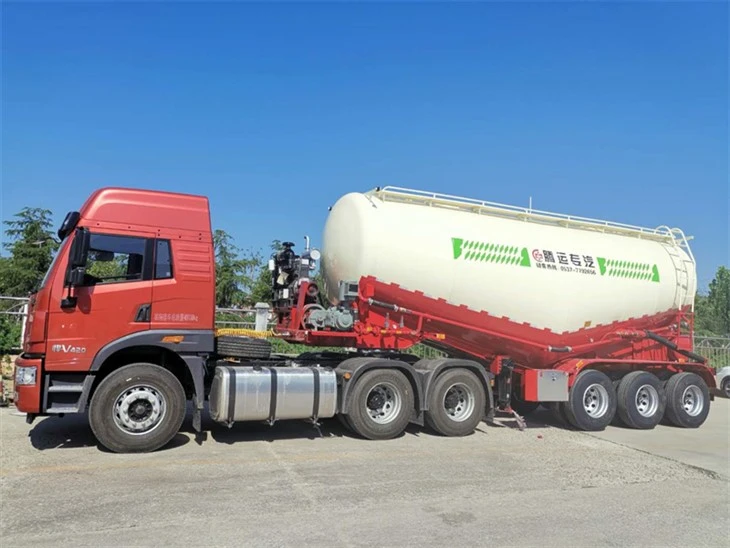
Before discussing its suitability for rough terrains, let's first understand what a tank dump trailer is. A Tank Dump Trailer is a specialized type of semi - trailer designed to transport and discharge various types of liquids or bulk materials. These trailers typically consist of a large tank mounted on a chassis with axles and wheels, and they are equipped with a dumping mechanism that allows for the controlled release of the cargo.
There are different types of tank dump trailers, such as Cement Tank Trailer and Powder Material Trailer, each designed to handle specific types of materials. Cement tank trailers, for example, are used to transport cement powder, while powder material trailers can carry other fine powders like fly ash or lime.
Factors Affecting a Tank Dump Trailer's Performance on Rough Terrains
Suspension System
One of the most important factors is the suspension system of the trailer. A well - designed suspension can absorb the shocks and vibrations caused by rough terrains, ensuring a smooth ride and protecting the tank and its contents. There are several types of suspension systems available, including leaf spring suspensions, air suspensions, and rubber suspensions.
Leaf spring suspensions are the most common and cost - effective option. They are simple in design and can provide adequate support for most applications. However, they may not be as effective in absorbing shocks on extremely rough terrains compared to air or rubber suspensions.
Air suspensions, on the other hand, offer a higher level of comfort and stability. They can adjust the ride height and stiffness based on the load and the terrain conditions. This makes them a great choice for trailers that need to operate on rough terrains regularly.
Rubber suspensions are also a good alternative. They are known for their durability and ability to provide a smooth ride. Rubber suspensions can effectively dampen vibrations and shocks, reducing the stress on the trailer and its components.
Tire Selection
The tires of a tank dump trailer play a vital role in its performance on rough terrains. Tires with deep treads and high sidewalls are more suitable for rough terrains as they provide better traction and stability. All - terrain tires are a popular choice for trailers that need to operate in various conditions, including mud, gravel, and uneven surfaces.
In addition to the tread pattern, the tire size and load capacity are also important considerations. Larger tires can provide more ground clearance, which is essential for avoiding obstacles on rough terrains. The load capacity of the tires should be sufficient to support the weight of the trailer and its cargo.
Chassis Design
The chassis of the tank dump trailer is the backbone of the entire structure. A robust and well - engineered chassis is essential for withstanding the stresses and strains of rough terrain operation. The chassis should be made of high - strength steel and have a proper frame design to ensure maximum rigidity and durability.
Some trailers are designed with a reinforced chassis to handle the additional forces encountered on rough terrains. These reinforced chassis can prevent the trailer from twisting or bending, which could lead to damage to the tank and other components.
Dumping Mechanism
The dumping mechanism of the tank dump trailer also needs to be considered. On rough terrains, the trailer may experience sudden movements and vibrations, which could affect the operation of the dumping mechanism. A reliable and well - maintained dumping mechanism is essential to ensure safe and efficient unloading of the cargo.
Some advanced dumping mechanisms are designed to be more resistant to shocks and vibrations. They use hydraulic systems that are better able to handle the dynamic forces encountered on rough terrains.
Advantages of Using a Tank Dump Trailer on Rough Terrains
Versatility
One of the main advantages of using a tank dump trailer on rough terrains is its versatility. In industries such as construction and mining, there are often sites with uneven and rough surfaces. A tank dump trailer can easily access these areas and transport and discharge materials where other types of vehicles may not be able to reach.
Efficiency
Tank dump trailers can be very efficient in transporting and unloading materials on rough terrains. They can carry large volumes of materials in a single trip, reducing the number of trips required and saving time and resources. The dumping mechanism allows for quick and easy unloading, which is especially important in time - sensitive projects.
Cost - effectiveness
Compared to other types of transportation methods, tank dump trailers can be a cost - effective solution for transporting materials on rough terrains. They require less infrastructure and can operate in areas where building roads or using other types of vehicles may be prohibitively expensive.
Challenges and Limitations
Maintenance
Operating a tank dump trailer on rough terrains can increase the wear and tear on the trailer's components. The suspension system, tires, and chassis are all subject to more stress and damage, which means more frequent maintenance is required. Regular inspections and maintenance can help prevent breakdowns and ensure the safe operation of the trailer.
Safety Concerns
Rough terrains pose additional safety risks for tank dump trailers. The uneven surfaces can cause the trailer to tip over or lose control, especially when the tank is partially or fully loaded. It is essential to follow proper safety procedures and ensure that the trailer is operated by trained and experienced drivers.
Cargo Protection
The rough terrain can also affect the integrity of the cargo. For example, if the trailer is transporting a liquid, the constant jolting and vibrations can cause splashing and spills. Special measures may need to be taken to ensure that the cargo is properly secured and protected during transportation.
Conclusion
In conclusion, a tank dump trailer can be used on rough terrains, but several factors need to be considered. The suspension system, tire selection, chassis design, and dumping mechanism all play important roles in determining the trailer's performance and suitability for rough terrain operation. While there are challenges and limitations, the advantages of using a tank dump trailer on rough terrains, such as versatility, efficiency, and cost - effectiveness, make it a viable option for many industries.

If you are considering purchasing a tank dump trailer for use on rough terrains, I encourage you to contact us for more information. Our team of experts can help you choose the right trailer based on your specific needs and provide you with all the support and guidance you need. We are committed to providing high - quality tank dump trailers that can perform reliably in even the most challenging conditions.
References
- Truck Trailer Manufacturers Association (TTMA) publications on trailer design and performance.
- Industry reports on the use of tank dump trailers in construction and mining sectors.