

Hey there! I'm a supplier of Hydraulic Axis Cars, and today I wanna chat about how the hydraulic axis affects the acceleration response time of these awesome vehicles.
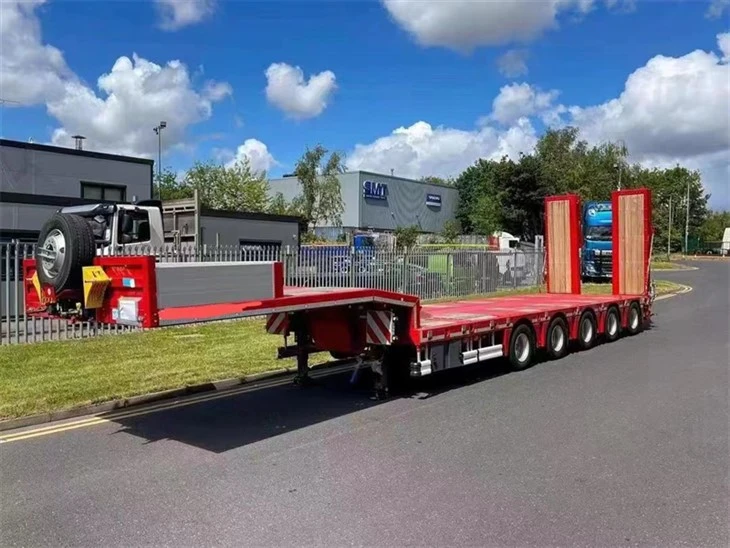

First off, let's understand what a hydraulic axis is. In a Hydraulic Axis Car, the hydraulic axis is a crucial component. It's basically a system that uses hydraulic pressure to control the movement of the axles. This system plays a huge role in how the car behaves during acceleration.
When it comes to acceleration response time, the hydraulic axis has a direct impact. You see, the hydraulic axis is responsible for adjusting the load distribution on the axles. When you step on the accelerator, the engine starts to generate power, and the hydraulic axis needs to quickly adjust to this change. If the hydraulic axis is in top - notch condition, it can rapidly redistribute the load on the axles, which in turn allows the tires to grip the road better. This better grip means that the car can accelerate more efficiently, reducing the acceleration response time.
For example, let's say you've got a Removable Gooseneck Lowboy Trailer attached to your Hydraulic Axis Car. When you start to accelerate, the hydraulic axis needs to shift the load to ensure that the trailer doesn't cause any instability. A well - functioning hydraulic axis can do this in a split second, allowing the whole setup to start moving smoothly. On the other hand, if the hydraulic axis is slow or malfunctioning, it might take longer to adjust the load. This delay can lead to a longer acceleration response time as the tires may not get the right amount of traction immediately.
The design of the hydraulic axis also matters a great deal. Some hydraulic axes are designed with advanced valves and pumps that can respond faster to changes in pressure. These high - performance hydraulic axes can significantly reduce the acceleration response time. They can quickly increase or decrease the hydraulic pressure in the system, which directly affects how fast the axles can adjust.
Another factor is the fluid used in the hydraulic axis. The viscosity of the hydraulic fluid plays a role in the response time. If the fluid is too thick, it can slow down the movement of the hydraulic components. This means that the axles will take longer to adjust, and the acceleration response time will be longer. On the contrary, if the fluid is too thin, it may not provide enough pressure to move the axles effectively. So, using the right type of hydraulic fluid is essential for optimal acceleration response.
Maintenance of the hydraulic axis is also key. Over time, the hydraulic components can wear out. Seals can leak, and valves can get clogged. If these issues aren't addressed, they can have a negative impact on the acceleration response time. Regular maintenance, such as checking the fluid level, replacing worn - out parts, and cleaning the valves, can keep the hydraulic axis in good working condition. This way, the car can maintain a quick acceleration response time.
Let's talk about the relationship between the hydraulic axis and different driving conditions. In wet or slippery conditions, the hydraulic axis becomes even more important. When the tires have less grip on the road, the hydraulic axis needs to work extra hard to redistribute the load. A fast - responding hydraulic axis can help the car maintain traction and accelerate more quickly, even in these challenging conditions.
In off - road situations, the hydraulic axis has to adapt to uneven terrain. When the car goes over bumps or dips, the hydraulic axis needs to adjust the height and load of the axles. This adjustment helps the car to keep moving forward without getting stuck. If the hydraulic axis is slow to respond, the car may lose momentum, and the acceleration response time will be affected.
Now, let's consider the impact of the hydraulic axis on fuel efficiency. A shorter acceleration response time can actually lead to better fuel efficiency. When the car can accelerate quickly, it spends less time in the lower gears, where the engine consumes more fuel. The hydraulic axis helps the car to reach the optimal speed faster, which means less fuel is wasted during the acceleration phase.
If you're in the market for a Low Flatbed Trailer or a Hydraulic Axis Car, it's important to pay attention to the quality of the hydraulic axis. A high - quality hydraulic axis can make a big difference in the performance of your vehicle. It can give you a quicker acceleration response time, better traction, and improved fuel efficiency.
In conclusion, the hydraulic axis is a vital component of a Hydraulic Axis Car. It has a significant impact on the acceleration response time. From load distribution to adapting to different driving conditions, the hydraulic axis plays a crucial role in how quickly the car can accelerate. If you're looking for a reliable and high - performing Hydraulic Axis Car or trailer, make sure to consider the quality of the hydraulic axis.
If you're interested in learning more about our Hydraulic Axis Cars or trailers, or if you're thinking about making a purchase, don't hesitate to reach out. We're here to answer all your questions and help you find the perfect vehicle for your needs. Let's start a conversation and see how we can work together to get you the best equipment for your business.
References
- "Hydraulic Systems in Automotive Engineering" - A technical guide on automotive hydraulic systems.
- "Vehicle Dynamics and Hydraulic Axles" - Research paper on the relationship between vehicle dynamics and hydraulic axles.